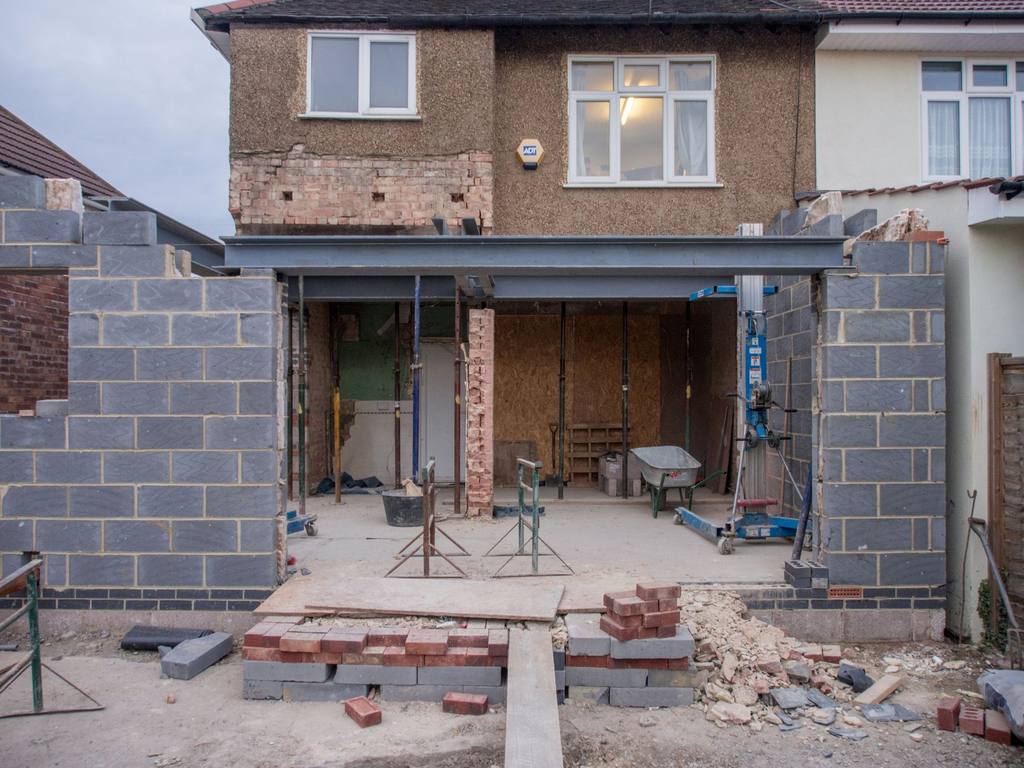
Photo by Brett Jordan on Pexels.
On a new house or a major rebuild, building control is the only independent check that the structure, fire safety, drainage, insulation and ventilation meet the legal minimum. It is also one of the places where unscrupulous builders take short cuts: "we don't need to bother with building control on this", "the inspector's a formality", "we'll sort the certificate at the end". This guide explains how the system now works in England, the choices you make at the start, and how to make sure you finish with the paperwork your house will need for the rest of its life. Our earlier guide on protecting yourself on a major build covers warranties, contracts and deposits. Sources were checked on 22 October 2026.
Choosing a building control body
GOV.UK's building regulations approval guidance explains that, unless the project involves a higher-risk building (where the Building Safety Regulator is the authority), you can apply to either:
- your local council's building control service, usually through the Planning Portal; or
- a private registered building control approver, who will notify the council by giving an "initial notice".
Local authorities base their fees on their costs, which vary with the type of work, the number of inspections and the floor area; private approvers negotiate fees directly. Since the Building Safety Act reforms, every private business doing this work must be registered with the Building Safety Regulator. You can check a firm on the register of building control approvers, which shows the registration number, the type of work it may do, registration dates and any conditions - and individual inspectors on the separate register of building inspectors.
A sensible question for any builder who says they "have a building control company they always use" is simply: what is its registration number? It takes a minute to check.
Full plans, building notice or regularisation
GOV.UK describes three types of application for non-higher-risk work:
- Full plans - the most thorough option. You can expect a decision within 5 weeks, or 2 months with your consent, and you will usually get a completion certificate within 8 weeks of completion if the work complies. For a new house this is the route to insist on: the drawings are checked before work starts, so problems are found on paper rather than in concrete.
- Building notice - for smaller projects only. Work can start two days after the notice is submitted, but there is no formal approval of plans.
- Regularisation - retrospective approval for work already done without consent, available only from a local authority and only for work carried out after 11 November 1985. You may have to make alterations before a regularisation certificate is issued.
Approval does not last for ever. Under the amended section 32 of the Building Act 1984, if work on a single building is not commenced within 3 years of the application, the approval lapses. On a London scheme that stalls over finance or a party wall dispute, that clock matters.
The notices: start, commencement and completion
The 2023 reforms tightened the paperwork. As one council's guidance summarises, under regulation 16 of the Building Regulations 2010:
- notice of intention to start must be given, and at least two days must pass after the day of the notice before work begins;
- the authority must also be told when work is "regarded as commenced" - for a small house, broadly when the sub-surface structure, including foundations and the ground-floor structure, is complete;
- for applications made on or after 1 October 2023, a completion notice must be provided within 5 days of completion, stating that to the best of the client's, principal contractor's and principal designer's knowledge the work complies, before the completion certificate is issued.
In practice your builder or designer will usually handle these notices, but you should ask to see them. A builder who has never heard of a commencement or completion notice is telling you something about how up to date they are.
Dutyholders: who is responsible for compliance
The reforms also introduced building regulations "dutyholders" - client, principal designer and principal contractor - in Part 2A of the Building Regulations 2010. GOV.UK's guidance on meeting building requirements explains the roles. For domestic clients, most client duties transfer to the contractor (or principal contractor where there is more than one), unless you agree in writing that the principal designer will take them on; if appointments are not made, the designer and contractor in control of each phase are treated as the principal designer and principal contractor. Domestic clients must still co-operate and provide information. Make sure your contract names who holds each role.
London-specific standards to expect on a new house
A new dwelling must meet every relevant part of the Building Regulations - structure, fire, ventilation, conservation of fuel and power, drainage, accessibility and more. One London-specific point concerns water. Approved Document G sets a standard of 125 litres per person per day, with a tighter optional requirement of 110 litres per person per day where a planning condition imposes it. The London Plan's water policy (Policy SI 5) expects new homes in the capital to meet the tighter figure, so check your planning conditions and make sure your designer's water calculation reflects them - it affects the choice of taps, showers, baths and WCs.
Certain elements can be self-certified by members of competent person schemes - for example gas work by Gas Safe registered engineers and electrical work by registered electricians. Collect each certificate as the work finishes; building control will want them before signing off.
Why the completion certificate matters so much
Enforcement now has a long reach
If work contravenes the regulations, section 36 of the Building Act 1984 lets the building control authority require it to be pulled down or altered. In England the time limit for such a notice was extended by the Building Safety Act 2022 from 12 months to 10 years after completion, in force from 1 October 2023. There is one important protection: under section 36(5) and (5A), where an application for building control approval was granted and the work was carried out in accordance with the approved plans and any requirements imposed, a notice cannot be served on the ground that the work contravenes the regulations - another reason to choose full plans.
Selling, mortgaging and insuring
Buyers' solicitors routinely ask for building regulations sign-off. Solicitors Trethowans warn that without it an insurer may refuse a claim, and that the indemnity policies often offered as a workaround usually cover only enforcement action - not whether the work was built properly - with conditions that can invalidate them, such as the council having previously refused to certify.
How builders get it wrong - the red flags
- Starting on site before an application has been made, or before the two-day start period.
- Covering up foundations, drainage or structural steel before the inspection the building control body asked for.
- "Building notice" proposed for a whole new house to save time.
- Reluctance to give you the application reference or the approver's registration number.
- Promises that the certificate is "in the post" months after completion.
- Electrical, gas or glazing certificates that never materialise.
What to do if things have gone wrong
- Contact the building control body named on your application and ask for the inspection record and what is outstanding.
- Withhold the retention or final payment if your contract ties it to the completion certificate - which it should.
- Put the builder on written notice of the outstanding items and a reasonable deadline.
- If no application was ever made, take advice before contacting the council: regularisation is the proper fix, but it may involve opening up work, and it can affect any indemnity option.
- Use your warranty and dispute routes - see our guide to protecting yourself on a major build.
A building control checklist for your contract
- Full plans application, by whom, to which body (with registration number if private).
- Start, commencement and completion notices given on time, copies to you.
- Dutyholder roles named in writing.
- All competent person certificates handed over.
- Completion certificate a condition of final payment or release of retention.
A completion certificate is a single sheet of paper. It is also the document every future buyer, lender and insurer of your house will ask to see.
Sources (checked 22 October 2026): GOV.UK, Building regulations approval: how to apply; Building Safety Regulator, register of building control approvers; Building Act 1984, section 32 and 36; Building Regulations 2010, regulation 16 and Part 2A; Spelthorne Borough Council, start and completion notices; Approved Document G (with 2024 amendments); Trethowans, 25 June 2024. Information only; not legal advice.
Quick answers
Can my builder arrange building control for me?
Yes, and many do, but the application is for your project and the completion certificate is your evidence. Make sure the contract says who applies, which building control body is used, and that the certificate will be handed to you. Ask for the application reference and check it yourself.
What happens if building control approval is never obtained?
The building control authority can serve a notice requiring non-compliant work to be removed or altered. Since 1 October 2023 in England, that notice can be served up to 10 years after completion, rather than 12 months. Retrospective approval, called regularisation, is available only from the local authority and may require opening up the work.
Is indemnity insurance a substitute for a completion certificate?
Not really. Solicitors Trethowans note that such policies usually cover only enforcement action by the local authority, not whether the work was built properly, and that conditions - for example, not having contacted the council - can make them invalid.